 admin1
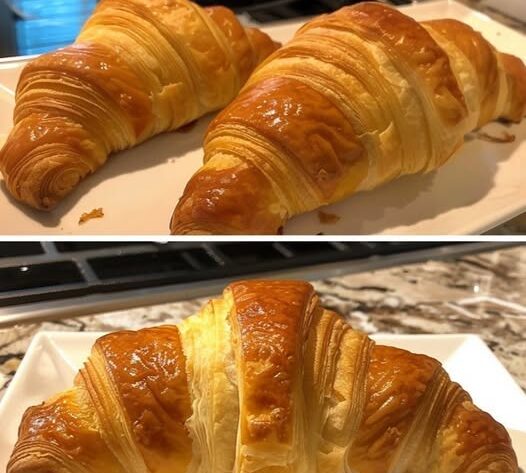
Homemade croissants are one of the most rewarding pastries to bake from scratch. With their crisp, golden exterior, delicate buttery layers, and soft, airy centers, these classic French pastries make an unforgettable breakfast or afternoon treat.
Although croissants require patience, the ingredients are simple: flour, yeast, milk, sugar, butter, salt, and an egg wash. The secret is a technique called lamination, which involves folding butter into the dough several times to create thin alternating layers. During baking, the moisture in the butter and dough produces steam, helping the pastry rise into its signature flaky layers.
This homemade croissant recipe guides you through preparing the dough, incorporating the butter, shaping the crescents, proofing, and baking until beautifully golden. You can prepare the dough ahead of time, making fresh croissants easier to enjoy on a weekend morning.
Recipe Details
Active preparation
About 1 hour
Baking time
18–22 minutes
Oven temperature
400°F (200°C)
Yield
12 croissants
Total elapsed time
About 8–12 hours
Includes chilling, folding, and proofing time. Most of this is hands-off.
Ingredients
For the Croissant Dough
- 4 cups (500 g) all-purpose flour or bread flour
- ¼ cup (50 g) granulated sugar
- 2¼ teaspoons (7 g) instant yeast
- 1½ teaspoons salt
- 1¼ cups (300 ml) cold milk
- 2 tablespoons (28 g) unsalted butter, softened
For the Butter Layers
– 1 cup (227 g) unsalted butter, cold but pliable
For the Egg Wash
- 1 large egg
- 1 tablespoon milk or water
Ingredient tip: Use good-quality butter with a rich flavor. The butter should be cold yet flexible enough to bend without cracking. If it becomes greasy or starts melting during preparation, refrigerate the dough before continuing.
Instructions
Step 1: Make the Croissant Dough
In a large mixing bowl, combine the flour, sugar, instant yeast, and salt. Keep the salt and yeast from sitting directly together in one concentrated spot before mixing.
Add the cold milk and softened butter. Mix until a rough dough forms, then knead for approximately 5–7 minutes by hand or 4–5 minutes in a stand mixer on low speed.
The dough should become smooth and elastic but remain relatively firm. Croissant dough should not be as soft or sticky as some enriched bread doughs.
Shape the dough into a rectangle, wrap it tightly, and refrigerate for at least 1–2 hours, or until thoroughly chilled. Chilling makes the dough easier to roll and helps keep the butter cold during lamination.
Step 2: Prepare the Butter Block
Place the cold butter between two sheets of parchment paper. Use a rolling pin to pound and roll it into a square approximately 7 × 7 inches (18 × 18 cm).
Aim for an even thickness throughout the butter block. Uneven butter can create irregular layers in the finished pastry.
Refrigerate the butter briefly if it becomes too soft. It should be pliable enough to bend slightly without breaking, but not so soft that it smears.
Step 3: Enclose the Butter
Remove the chilled dough from the refrigerator and roll it into a rectangle approximately 10 × 15 inches (25 × 38 cm).
Place the butter block in the center of the dough. Fold the dough over the butter so that the butter is completely enclosed, sealing the edges gently.
Make sure no butter is exposed. If the butter begins to soften or leak, wrap the dough and chill it for 20–30 minutes before proceeding.
Step 4: Complete the First Fold
Lightly flour your work surface and roll the dough into a long rectangle approximately 8 × 24 inches (20 × 60 cm). Apply even pressure, working from the center outward without squeezing the butter through the dough.
Brush away excess flour. Fold the dough into thirds, like a letter: bring one end toward the center and fold the other end over it.
This is called a single fold.
Wrap the dough and refrigerate for 30–45 minutes. Resting allows the gluten to relax and the butter to firm up again.
Step 5: Repeat the Folding Process
Remove the dough from the refrigerator and position it with the folded edge facing sideways. Roll it into another long rectangle, then fold it into thirds again.
Wrap and chill for another 30–45 minutes.
Repeat this process once more, giving you three single folds in total. Chill the dough for at least 1 hour after the final fold before shaping.
Keep the dough cool throughout. If it resists rolling, shrinks back, or feels warm, stop and refrigerate it rather than forcing it.
Step 6: Roll and Cut the Croissants
Roll the chilled dough into a large rectangle approximately 10 × 24 inches (25 × 60 cm), around ⅛ inch (3–4 mm) thick.
Trim the edges lightly if needed to reveal the layers. Cut the dough into long triangles approximately 4–5 inches (10–13 cm) wide at the base and 9–10 inches (23–25 cm) long.
Make a small slit in the middle of each triangle’s base. Gently stretch the triangle lengthwise, then roll it from the wide base toward the tip.
Roll firmly enough to create a neat crescent but avoid compressing the layers. Place each croissant on a parchment-lined baking tray with the pointed tip tucked underneath.
Step 7: Proof the Croissants
Cover the shaped croissants loosely and let them rise in a cool-to-moderately warm place for approximately 2–3 hours, depending on room temperature and yeast activity.
A temperature around 75–80°F (24–27°C) is suitable. Avoid placing croissants in a very hot spot because the butter may melt before the pastries reach the oven.
Properly proofed croissants should look noticeably larger, feel light and delicate, and wobble slightly when the tray is moved. The layers should remain visible.
If the dough still feels dense and the croissants look small, give them more time rather than rushing to bake.
Step 8: Apply the Egg Wash
Whisk the egg with 1 tablespoon of milk or water until smooth.
Gently brush a thin layer over the tops of the proofed croissants, taking care not to press down or allow excess egg wash to pool around the edges.
The egg wash helps produce the glossy, deep golden crust associated with bakery-style croissants.
Step 9: Bake Until Golden and Flaky
Preheat the oven to 400°F (200°C).
Bake the croissants for approximately 18–22 minutes, or until deeply golden brown and crisp on the outside. Rotate the tray if your oven browns unevenly.
If the pastries brown too quickly, lower the temperature slightly and continue baking until the centers are fully cooked. Avoid removing them while they are still pale, as underbaking can leave the interior doughy.
Transfer the croissants to a wire rack and allow them to cool for at least 10–15 minutes before serving.
Tips for Perfect Homemade Croissants
- Keep everything cool: Warm dough and melted butter can destroy the distinct layers that make croissants flaky.
- Measure accurately: Weighing the flour and butter gives more consistent results than measuring by volume alone.
- Don’t skip chilling: Resting between folds prevents the dough from becoming difficult to roll.
- Avoid excess flour: Brush away loose flour before folding so the layers stick together properly.
- Proof patiently: Underproofed croissants may turn out dense, while excessive warmth can cause butter leakage.
- Bake until deeply golden: A rich golden-brown color generally indicates better-developed flavor and a crisp exterior.
- Allow proper cooling: The interior continues to set after baking, so give the pastries time to rest.
Delicious Croissant Variations
Chocolate Croissants
Place two small pieces of baking chocolate near the base of each dough triangle before rolling. Bake as directed until the pastry is golden.
Almond Croissants
Fill baked, slightly stale croissants with almond cream, brush with syrup, and top with sliced almonds before reheating until crisp.
Ham and Cheese Croissants
Add thin slices of ham and cheese to the shaped dough before rolling, taking care not to overfill. Check that the center is fully cooked.
Mini Breakfast Croissants
Cut smaller triangles and roll them into bite-sized pastries. Reduce the baking time and check frequently for doneness.
How to Store Homemade Croissants
At room temperature: Keep completely cooled croissants in an airtight container for up to 2 days. Their crust will gradually soften.
Refrigerator: Refrigeration is generally unnecessary for plain croissants and can make them stale more quickly. Refrigerate filled croissants if their fillings require it.
Freezer: Freeze baked, cooled croissants in a freezer-safe bag for up to 2 months for best quality.
Reheating: Warm croissants in an oven at 325°F (165°C) for approximately 5–8 minutes. This helps restore their crisp exterior. Frozen croissants may need a few additional minutes.
Make-ahead option: After shaping, cover the croissants and refrigerate overnight if your recipe and proofing schedule allow. The following day, let them finish proofing until visibly puffy before applying egg wash and baking.
Nutrition Information
Estimated nutrition per croissant, based on 12 pastries:
| Nutrient | Approximate amount |
|---|---|
| Calories | 280 kcal |
| Protein | 6 g |
| Carbohydrates | 34 g |
| Total fat | 14 g |
| Saturated fat | 9 g |
| Sugar | 5 g |
| Fiber | 1 g |
| Sodium | 300 mg |
Nutrition values are estimates and depend on the flour, butter, pastry size, and ingredients used.
Frequently Asked Questions
Why are my croissants not flaky?
The butter may have softened too much during lamination, the dough may have been overworked, or the croissants may have been underproofed. Keeping the butter cool and following the resting periods helps create distinct layers.
Can I make croissants without a stand mixer?
Yes. You can mix and knead the dough by hand. The process takes a little more effort, but a stand mixer is not essential.
Why is butter leaking out during baking?
Butter leakage can occur when the butter becomes too warm, the dough layers are damaged, or the croissants are underproofed. Keep the dough cool and allow enough time for proofing.
Can I use salted butter?
Yes. If using salted butter, reduce the added salt in the dough slightly to prevent the croissants from becoming too salty.
Can I use active dry yeast instead of instant yeast?
Yes. Use the same approximate quantity and activate it according to the package instructions, using some of the recipe’s milk. Make sure the milk is lukewarm rather than hot when activating the yeast.
Can I prepare croissant dough a day ahead?
Yes. The dough can be refrigerated overnight during the lamination or shaping stage. Keep it tightly covered, and allow enough time for the final proof before baking.
What to Serve with Homemade Croissants
Homemade croissants are delicious on their own, but they are even better with a few simple accompaniments:
- Butter and strawberry or raspberry jam
- Honey or chocolate spread
- Scrambled eggs and cheese
- Fresh fruit and yogurt
- Coffee, tea, or hot chocolate
For a brunch gathering, serve them alongside fresh fruit, boiled eggs, cheese, and a selection of jams.