 admin1
Discover the remarkable world of cleavers (Galium aparine), a humble wild plant that has been valued in traditional herbal practices for generations. Often overlooked as a common weed, cleavers has a fascinating history of use in herbal teas, natural wellness preparations, and traditional remedies.
Known by its sticky stems and delicate green leaves, this familiar plant has earned a reputation as a gentle herbal companion. From its traditional use for supporting urinary health to its role in soothing herbal preparations, cleavers continues to attract interest among people exploring natural wellness.
But what does modern science actually say about this plant? How is it traditionally used, what are its potential benefits, and what precautions should you know before trying it?
Let’s explore the hidden treasure of cleavers and discover what makes this fascinating plant so special.
What Is Cleavers (Galium aparine)?
Cleavers is an annual herbaceous plant belonging to the Rubiaceae family, the same botanical family as coffee and gardenia. It grows naturally in gardens, hedgerows, meadows, woodland edges, and other places with moist soil.
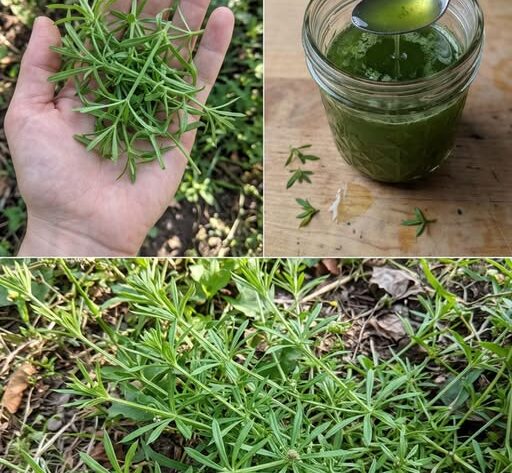
The plant is especially recognizable because of its narrow leaves arranged in whorls around the stem. Its stems and leaves are covered with tiny hooked hairs that allow it to cling to clothing, animal fur, and neighboring plants.
Common Names of Cleavers
- Cleavers
- Goosegrass
- Sticky Willy
- Catchweed Bedstraw
- Clivers
- Sticky Weed
The name “cleavers” refers to its ability to cling to surrounding objects. Its scientific name, Galium aparine, comes from Greek and Latin roots associated with milk and attachment.
Traditionally, herbalists have used the fresh or dried aerial parts of the plant, including its leaves and stems, for herbal preparations. drhazhan.com+1
Why Is Cleavers Called Nature’s Gentle Detoxifier?
Cleavers is frequently described in traditional herbal medicine as a cleansing or alterative herb.
The term “detoxifier” is often used in wellness discussions to describe herbs believed to support the body’s natural processes of eliminating waste. However, it is important to understand that the human body already has highly effective detoxification systems.
The liver processes many substances, the kidneys filter blood and produce urine, and the digestive system eliminates waste.
There is currently insufficient clinical evidence that cleavers detoxifies the human body or removes toxins from the blood.
Nevertheless, its traditional uses and interesting plant compounds have made it a subject of continuing scientific interest. HelloPharmacist+1
7 Traditional Benefits of Cleavers
1. Traditionally Used to Support Lymphatic Health
One of the best-known traditional uses of cleavers is its association with the lymphatic system.
The lymphatic system is a network of vessels, tissues, and lymph nodes that helps maintain fluid balance and supports immune function.
Traditional herbal practitioners have used cleavers in preparations intended to support lymphatic circulation and address feelings of swelling or congestion.
However, there is no strong clinical evidence showing that cleavers improves lymphatic drainage or reduces enlarged lymph nodes in humans.
Persistent or unexplained swollen lymph nodes should always be evaluated by a healthcare professional rather than treated with herbal remedies alone. Ziauddin University Libraries+1
2. May Support Urinary Wellness
Cleavers has historically been used as a mild diuretic, meaning a substance believed to encourage urine production.
In traditional herbal practices, it has been used in preparations intended to support urinary comfort and fluid balance.
Although this traditional use is well documented, reliable human studies have not established whether cleavers meaningfully increases urine output or improves urinary health.
It should not be used as a substitute for medical treatment of urinary tract infections, kidney disease, or painful urination. drhazhan.com+1
3. Contains Potentially Beneficial Plant Compounds
Cleavers contains several naturally occurring compounds, including:
| Plant compound | Potential significance |
|---|---|
| Flavonoids | Studied for antioxidant activity |
| Phenolic acids | May contribute to antioxidant properties |
| Tannins | Associated with astringent properties |
| Iridoids | Interesting compounds for phytochemical research |
| Organic acids | Naturally occurring components of plant metabolism |
Laboratory research has identified antioxidant activity in cleavers extracts.
Antioxidants are compounds that can help neutralize certain reactive molecules under experimental conditions. However, laboratory findings do not automatically demonstrate a health benefit when a plant is consumed by humans.
More clinical research is needed to determine whether cleavers provides meaningful antioxidant benefits in the body. nhaa.org.au/events/herbal-medicine-week/+1
4. Traditionally Used for Skin Wellness
Cleavers has a long history of traditional topical use for minor skin complaints.
Herbal preparations made from the plant have been used as washes, compresses, or ingredients in creams intended for irritated skin.
Some laboratory studies have investigated antimicrobial and other biological activities of cleavers extracts, but there is insufficient human evidence to establish that these preparations treat eczema, psoriasis, infections, or other skin conditions.
Anyone experiencing persistent irritation, spreading redness, an infected wound, or an unexplained rash should seek appropriate medical advice. nhaa.org.au/events/herbal-medicine-week/+1
5. May Have Mild Astringent Properties
Astringents are substances that can produce a tightening sensation in tissues.
Cleavers contains tannins, which are associated with astringent activity. This is one possible explanation for some of its historical uses in traditional herbal preparations.
However, the extent of this effect in humans and its practical health significance remain uncertain. drhazhan.com+1
6. Traditionally Used as a Springtime Herbal Tonic
In traditional European herbal practices, cleavers has often been associated with springtime wellness preparations.
The plant was gathered when young and tender and used in fresh herbal preparations.
This historical practice reflects traditional beliefs about seasonal cleansing and renewal rather than evidence that the body requires a seasonal detox.
A balanced diet, adequate hydration, regular physical activity, and sufficient sleep remain more reliable foundations for general wellness.
7. An Interesting Subject for Future Research
Cleavers has attracted scientific interest because of its chemical composition and biological activity in laboratory studies.
Researchers have explored its antioxidant properties and other potential biological effects.
Some early experimental findings have raised questions about possible antimicrobial and other activities, but these findings are preliminary.
Cleavers should not be promoted as a proven treatment for cancer, infections, or chronic diseases. More research is necessary before any such claims could be supported. myrener.com.au+1
How to Prepare Traditional Cleavers Tea
Cleavers has traditionally been prepared as an herbal infusion using its dried aerial parts.
The following is a general culinary-style preparation, not a clinically validated treatment or recommended medical dosage.
Ingredients
- 1 teaspoon dried cleavers herb from a reputable herbal supplier
- 1 cup (250 ml) freshly boiled water
- Optional: a little honey or lemon for flavor
Instructions
- Place the dried cleavers herb in a clean cup or teapot.
- Pour freshly boiled water over the herb.
- Cover and allow it to steep for approximately 5–10 minutes.
- Strain carefully to remove the plant material.
- Allow the infusion to cool to a comfortable temperature before drinking.
Traditional herbal references describe cleavers infusions, but there is no well-established, clinically validated dosage for treating a health condition. drhazhan.com+1
Cleavers Safety: What You Should Know
Although cleavers is a plant, natural does not automatically mean safe for everyone.
Research into its safety in humans is limited, and the absence of reported side effects does not establish that it is safe for unrestricted use.
Important precautions
| Group | Precaution |
|---|---|
| Pregnant or breastfeeding individuals | Avoid medicinal use because safety is not established |
| People with kidney conditions | Consult a healthcare professional before use |
| People taking diuretics | Ask a doctor or pharmacist about possible additive effects |
| People taking prescription medicines | Check for potential interactions |
| People with plant allergies | Avoid use if allergic or seek professional advice |
| Children | Do not use medicinal preparations without professional guidance |
Because cleavers is traditionally associated with diuretic activity, extra caution is appropriate for people who have dehydration, fluid-balance problems, or conditions requiring careful monitoring of kidney function.
Do not use cleavers to treat unexplained swelling, persistent urinary symptoms, or enlarged lymph nodes without medical assessment. HelloPharmacist+1
How to Identify Cleavers in Nature
If you encounter cleavers growing in your garden or nearby woodland, several features can help with identification.
Leaves: Narrow, lance-shaped leaves arranged in circles around the stem.
Stems: Long, slender, branching stems that may sprawl or climb over nearby plants.
Texture: Tiny hooked hairs give the plant its characteristic sticky feeling.
Flowers: Small, delicate, usually white or greenish-white flowers.
Growth habit: Often grows in tangled patches and attaches itself to neighboring vegetation.
Never consume a wild plant based on a photograph or a single identifying feature. Correct botanical identification is essential, particularly when gathering plants for consumption.
Frequently Asked Questions
Is cleavers tea good for detoxification?
Cleavers tea is traditionally used as a cleansing herbal preparation. However, there is insufficient scientific evidence that it removes toxins from the body or improves liver or kidney detoxification.
Can cleavers help with swollen lymph nodes?
Cleavers has a traditional association with lymphatic wellness, but clinical studies have not established that it reduces swollen lymph nodes. Persistent swelling should be evaluated by a healthcare professional.
Can cleavers be eaten?
Cleavers has a history of traditional food use in some regions, particularly when the plant is young and tender. However, correct identification and careful preparation are essential. Medicinal use and food use are not interchangeable.
Is cleavers safe to drink every day?
There is insufficient evidence to establish the safety of long-term daily medicinal use. Speak with a qualified healthcare professional before using cleavers regularly, especially if you take medication or have an existing medical condition.