 admin1
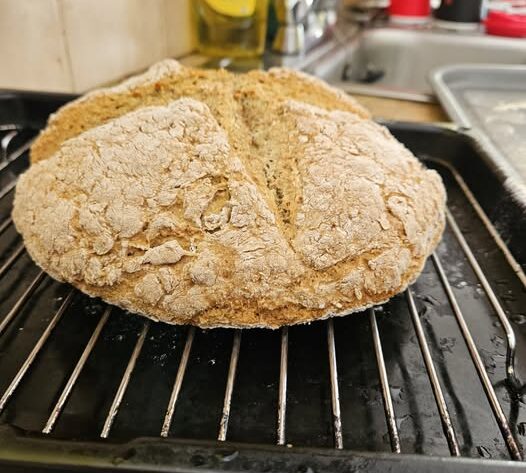
Traditional Irish Soda Bread is one of the easiest homemade breads you can bake. Unlike yeast breads, it requires no yeast, no lengthy kneading, and no long rising time. Instead, baking soda reacts with acidic buttermilk to create the lift, producing a rustic loaf with a crisp golden crust and a soft, slightly dense interior.
This classic bread is perfect alongside soups, stews, roasted meats, or simply sliced and spread with butter. It can be prepared in just a few minutes and baked immediately, making it ideal when you want fresh homemade bread without waiting for dough to rise.
Recipe at a Glance
- Prep Time: 15 minutes
- Bake Time: 40–45 minutes
- Total Time: About 1 hour
- Servings: 10 slices
- Bake Temperature: 425°F (220°C), then 400°F (200°C)
- Difficulty: Easy
Why You’ll Love This Irish Soda Bread
- No yeast required
- No kneading or complicated techniques
- No rising time
- Simple everyday ingredients
- Ready in about an hour
- Crisp outside and tender inside
- Delicious with butter, cheese, soup, or jam
- Easy enough for beginner bakers
The rustic appearance is part of the charm. You don’t need a perfect round loaf—an uneven homemade shape is exactly what makes soda bread look traditional.
Ingredients
- 4 cups all-purpose flour
- 1 teaspoon baking soda
- 1 teaspoon salt
- 1½ cups buttermilk, plus a little extra if needed
- 1 tablespoon butter, optional, for brushing
Optional Additions
For a slightly different version, you can add:
- 1 tablespoon honey
- ½ cup raisins
- ½ cup dried cranberries
- 1 teaspoon caraway seeds
- 1 tablespoon chopped fresh herbs
- ½ cup shredded cheddar cheese
For a classic savory Irish soda bread, however, flour, baking soda, salt, and buttermilk are all you really need.
How to Make Irish Soda Bread
1. Preheat the Oven
Preheat your oven to 425°F (220°C).
Line a baking sheet with parchment paper or lightly grease it.
You can also bake the loaf in a lightly greased cast-iron skillet or Dutch oven.
2. Combine the Dry Ingredients
Add the flour, baking soda, and salt to a large mixing bowl.
Whisk everything together until evenly distributed.
It’s important to mix the baking soda thoroughly through the flour so that it doesn’t become concentrated in one area of the loaf.
3. Add the Buttermilk
Make a well in the center of the dry ingredients.
Pour in approximately 1¼ cups of the buttermilk and gently mix with a wooden spoon or your hands.
Add the remaining buttermilk gradually until the dough comes together.
The dough should be soft and slightly sticky, but it should not be wet or runny.
Avoid overmixing. Soda bread doesn’t need kneading like traditional yeast bread.
4. Shape the Dough
Turn the dough onto a lightly floured surface.
Gently bring it together into a round loaf.
Don’t knead aggressively. A few gentle folds are enough.
Shape the dough into a round approximately 7–8 inches wide.
Transfer it to your prepared baking sheet.
5. Cut the Traditional Cross
Using a sharp knife, cut a deep cross across the top of the loaf.
The cross is a traditional feature of Irish soda bread and also helps the center of the loaf cook properly.
Don’t be afraid to make the cuts fairly deep—about ½ inch is suitable.
6. Bake the Bread
Place the loaf in the preheated oven.
Bake at 425°F (220°C) for 15 minutes.
Then reduce the temperature to 400°F (200°C) and continue baking for approximately 25–30 minutes.
The bread should develop a deep golden-brown crust.
A properly baked loaf should sound hollow when tapped on the bottom.
For additional accuracy, the center should reach approximately 200–205°F (93–96°C).
7. Cool Before Slicing
Transfer the bread to a wire rack.
Allow it to cool for at least 20–30 minutes before slicing.
Although the bread smells wonderful straight from the oven, allowing it to cool helps the interior finish setting.
Slice with a serrated bread knife and serve.
The Secret to Great Soda Bread
The most important ingredient isn’t actually the flour—it’s the buttermilk.
Buttermilk provides the acidity needed to react with baking soda. This chemical reaction produces carbon dioxide bubbles, which help the bread rise.
Because soda bread relies on this reaction rather than yeast fermentation, you should work relatively quickly once the buttermilk is added.
Don’t mix the dough and let it sit for a long time before baking.
Tips for Perfect Irish Soda Bread
Don’t Overmix
Overworking the dough can produce a tougher loaf.
Mix only until the flour is incorporated.
Don’t Add Too Much Flour
The dough should be slightly sticky. Adding excessive flour can make the bread dry and heavy.
Use Fresh Baking Soda
Old baking soda may not react strongly enough with the buttermilk, resulting in a dense loaf.
Work Quickly
Once the wet and dry ingredients come together, shape the loaf and get it into the oven.
Make the Cross
The cross helps the bread expand during baking and gives the finished loaf its recognizable appearance.
What If You Don’t Have Buttermilk?
You can make a simple substitute.
Add 1 tablespoon of lemon juice or white vinegar to a measuring cup, then add enough milk to make 1½ cups.
Stir and let it stand for approximately 5–10 minutes.
The milk will become slightly thickened and acidic enough to work as a substitute in many soda bread recipes.
The flavor may be slightly different from traditional cultured buttermilk, but the bread can still turn out well.
Irish Soda Bread Variations
Raisin Soda Bread
Add ½–1 cup raisins to the dough for a slightly sweet version.
This is particularly delicious toasted and served with butter.
Brown Irish Soda Bread
Replace part of the white flour with whole wheat flour for a nuttier, heartier loaf.
Because whole wheat flour absorbs more liquid, you may need a little additional buttermilk.
Cheddar Herb Soda Bread
Add ½ cup shredded cheddar cheese and 1 tablespoon chopped fresh herbs.
Rosemary, parsley, chives, and thyme all work beautifully.
Honey Soda Bread
For a mildly sweet loaf, add 1–2 tablespoons honey.
This version is delicious with butter or fruit preserves.
Caraway Soda Bread
Add approximately 1 teaspoon caraway seeds for a traditional savory flavor.
What to Serve With Irish Soda Bread
This bread is incredibly versatile.
Serve thick slices with:
- Salted butter
- Irish cheddar
- Homemade jam
- Honey
- Marmalade
- Scrambled eggs
- Vegetable soup
- Irish stew
- Beef stew
- Creamy mushroom soup
- Roasted meats
Freshly baked soda bread is particularly delicious alongside a bowl of warm soup because it is perfect for soaking up the broth.
How to Store Soda Bread
Soda bread is best on the day it is baked.
Once completely cooled, wrap it loosely in a clean kitchen towel or place it in an airtight container.
Store at room temperature for approximately 2–3 days.
Avoid refrigerating it unless necessary, because refrigeration can make bread stale more quickly.
Freezing
Irish soda bread freezes very well.
Slice the cooled loaf before freezing if you want individual portions.
Wrap slices tightly and place them in a freezer-safe bag or container.
Freeze for up to 2–3 months for the best quality.
Thaw at room temperature or warm individual slices in a toaster or oven.
Frequently Asked Questions
Does Irish soda bread contain yeast?
Traditional soda bread does not contain yeast. Baking soda provides the leavening when it reacts with the acidity in buttermilk.
Why is my soda bread dense?
A dense loaf can result from too much flour, insufficient baking soda, old baking soda, overmixing, or not using enough acidic liquid.
Can I use regular milk?
Regular milk by itself doesn’t provide the same acidity as buttermilk. Add lemon juice or vinegar to milk to create a simple buttermilk substitute.
Why did my bread crack?
Small cracks are normal in rustic soda bread. A deep crack or split can happen when the dough is too dry or wasn’t shaped evenly.
Can I make soda bread with whole wheat flour?
Yes. You can replace some of the all-purpose flour with whole wheat flour. The loaf will have a denser texture and nuttier flavor.
Nutrition Information
Estimated per slice, based on 10 slices:
- Calories: 220
- Protein: 7 g
- Carbohydrates: 39 g
- Fat: 4 g
- Saturated Fat: 2 g
- Fiber: 2 g
- Sugar: 2 g
- Sodium: 430 mg
Nutrition information is an estimate and will vary depending on the ingredients and portion size.