 admin1
Traditional Bannock is a simple, hearty flatbread with deep roots in Indigenous cooking traditions across North America. It became widely known for its practicality—made from basic pantry ingredients, cooked quickly, and adaptable to baking, frying, or open-fire cooking. Today, it remains a beloved comfort bread: crisp on the outside, soft inside, and perfect with both sweet and savory toppings.
This version gives you a full detailed recipe with temperatures, timing, variations, and nutrition, so you can make perfect bannock at home whether you bake it in the oven, fry it in a pan, or cook it over fire.
What is Bannock?
Bannock is a simple flatbread traditionally made with:
- Flour
- Baking powder
- Salt
- Water or milk
- Fat (butter, oil, or lard)
It has a texture similar to a cross between soda bread and scones. Depending on how it’s cooked, it can be:
- Soft and fluffy (oven-baked)
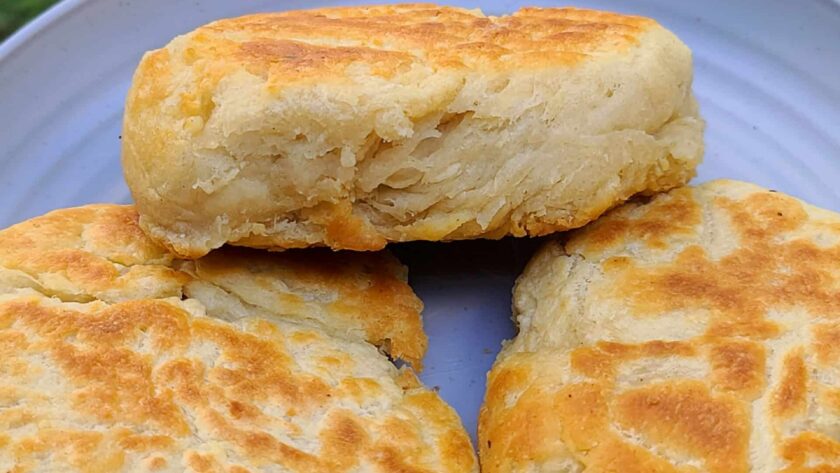
- Crispy and golden (pan-fried)
- Smoky and rustic (fire-cooked)
It’s one of the most adaptable breads in the world and can be served with soups, stews, butter, jam, honey, or even used as sandwich bread.
Ingredients (Serves 6–8 pieces)
Dry Ingredients
- 3 cups all-purpose flour (or whole wheat flour for a denser version)
- 1 tablespoon baking powder
- 1 teaspoon salt
- 1 tablespoon sugar (optional, for slight sweetness)
Wet Ingredients
- 1 cup warm water or milk (240 ml)
- 2 tablespoons melted butter, oil, or lard (plus extra for cooking)
Optional Add-ins
- ½ cup raisins or dried berries (sweet version)
- 1 teaspoon garlic powder (savory version)
- ½ cup shredded cheese (cheesy bannock)
- Fresh herbs (rosemary, thyme, chives)
Kitchen Tools
- Mixing bowl
- Wooden spoon or hands
- Rolling pin (optional)
- Frying pan or baking tray
- Oven or stovetop
Step-by-Step Instructions
Step 1: Mix Dry Ingredients (2–3 minutes)
In a large bowl, combine:
- Flour
- Baking powder
- Salt
- Sugar (if using)
Mix thoroughly so the baking powder is evenly distributed. This ensures even rising.
Step 2: Add Wet Ingredients (5–7 minutes)
Slowly pour in warm water or milk while mixing.
Add melted butter or oil.
Stir until a dough begins to form.
The dough should be:
- Soft but not sticky
- Easy to handle
- Slightly elastic
If too dry, add a tablespoon of water at a time. If too sticky, sprinkle in more flour.
Step 3: Knead the Dough (3–5 minutes)
Lightly flour a surface and knead the dough gently for 3–5 minutes.
Do not over-knead—bannock is not like yeast bread. Overworking will make it tough.
You want a smooth, soft dough ball.
Step 4: Rest the Dough (10–15 minutes)
Cover the dough with a cloth and let it rest at room temperature.
This allows:
- Gluten to relax
- Baking powder to activate slightly
- Better texture after cooking
Cooking Methods
You can cook bannock in three main ways. Each method gives a different texture and flavor.
METHOD 1: Pan-Fried Bannock (Crispy & Traditional)
Temperature: Medium heat (175–190°C / 350–375°F)
- Heat a heavy skillet or frying pan over medium heat.
- Add 1–2 tablespoons oil, butter, or lard.
- Flatten dough into a round disc about 1–1.5 cm thick.
- Place in the pan and cook for 6–8 minutes per side.
What to look for:
- Golden brown crust
- Slight puffing in the center
- Crisp edges
Flip carefully and cook the other side until fully golden.
👉 Total cooking time: 12–16 minutes
METHOD 2: Oven-Baked Bannock (Soft & Even Texture)
Oven Temperature: 200°C (400°F)
- Preheat oven to 200°C (400°F).
- Place dough on a greased baking tray.
- Flatten into a round or rectangle about 2 cm thick.
- Brush top with melted butter for a golden crust.
Bake for:
- 20–25 minutes or until golden brown
Signs it’s done:
- Light golden top
- Hollow sound when tapped
- Firm but soft center
METHOD 3: Open-Fire Bannock (Traditional Rustic Style)
Heat Level: Medium-hot embers (not direct flame)
- Wrap dough around a stick OR place flat dough on a greased cast iron pan.
- Cook over hot embers.
- Turn frequently for even cooking.
Cooking time:
- 10–15 minutes depending on heat
This version develops a smoky flavor and crisp crust.
Texture Guide
- Soft bannock → oven baked
- Crispy bannock → pan fried
- Smoky rustic bannock → fire cooked
Serving Ideas
Traditional Bannock is extremely versatile:
Sweet Options
- Honey and butter
- Jam or marmalade
- Maple syrup
- Cinnamon sugar
Savory Options
- Stews and soups
- Chili or curry
- Eggs and bacon
- Smoked meats
Modern Uses
- Sandwich bread replacement
- Burger buns
- Pizza base
Variations
1. Sweet Bannock
Add:
- Extra sugar (2–3 tbsp)
- Raisins or cranberries
- Cinnamon
2. Savory Herb Bannock
Add:
- Garlic powder
- Rosemary or thyme
- Grated cheese
3. Fried Dough Bannock
Flatten small pieces and deep fry at:
- 180°C (350°F) for 2–3 minutes per side
Result: crispy, donut-like texture
4. Whole Wheat Bannock
Replace half flour with whole wheat flour for:
- More fiber
- Earthier flavor
- Denser texture
Nutrition Information (Per Serving)
Approximate values (based on 1 of 8 pieces):
- Calories: 180–230 kcal
- Carbohydrates: 30–35g
- Protein: 4–6g
- Fat: 5–8g
- Fiber: 1–3g
- Sugar: 1–3g
- Sodium: 200–300mg
Health Notes
Bannock is simple but provides:
- Energy-rich carbohydrates
- Customizable fat content
- Moderate protein
- Can be made healthier with whole wheat flour or reduced oil
Storage Instructions
Room Temperature
- Store in airtight container for 1–2 days
Refrigerator
- Keeps for up to 5 days
Freezer
- Freeze for up to 2 months
Reheating
- Oven: 160°C (320°F) for 5–7 minutes
- Pan: 2–3 minutes per side
- Microwave: 20–30 seconds (softer texture)
Common Mistakes to Avoid
- Over-kneading (makes it tough)
- Too high heat (burns outside, raw inside)
- Too much flour (dry texture)
- Not resting dough (less tender bread)
Expert Tips
- Always preheat pan or oven fully
- Brush with butter immediately after cooking for softness
- Use cast iron for best crust
- Keep dough slightly soft—not stiff
- Don’t rush cooking time; let it brown naturally