 admin1
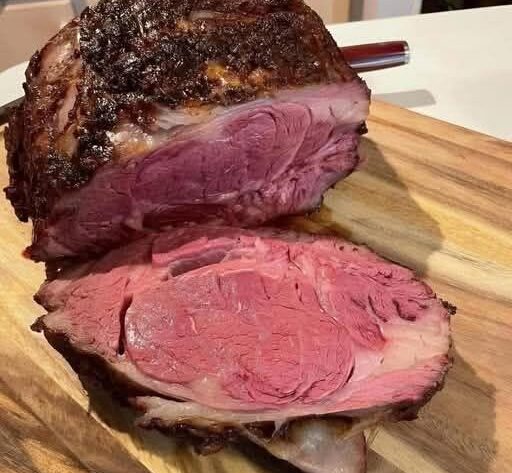
A beautifully cooked Prime Rib Roast is one of the most impressive centerpieces you can serve for holidays, celebrations, or a special Sunday dinner. With its juicy, tender interior, flavorful herb crust, and rich beefy taste, prime rib is surprisingly simple to prepare when you follow the right method. Slow roasting at a low temperature followed by a high-heat finish creates a perfectly cooked roast with a beautifully browned crust and edge-to-edge rosy meat.
Whether you’re serving it for Christmas, Easter, Thanksgiving, or a family gathering, this foolproof recipe will help you achieve restaurant-quality results right in your own kitchen.
Why You’ll Love This Recipe
- Juicy, tender, and incredibly flavorful
- Perfectly seasoned herb crust
- Foolproof slow-roasting method
- Ideal for holidays and special occasions
- Minimal hands-on preparation
- Naturally gluten-free
- Delicious leftovers for sandwiches
- Impressive presentation
Preparation Time
- Prep Time: 20 minutes
- Resting Time (Before Roasting): 2 hours
- Cook Time: 2½–3½ hours (depending on size and desired doneness)
- Resting Time (After Roasting): 30 minutes
- Total Time: Approximately 5–6 hours
Servings: 8–10
Ingredients
For the Prime Rib
- 1 bone-in prime rib roast (6–8 pounds / 2.7–3.6 kg)
- 2 tablespoons olive oil
- 3 tablespoons kosher salt
- 2 teaspoons freshly ground black pepper
- 2 tablespoons fresh rosemary, finely chopped
- 2 tablespoons fresh thyme leaves
- 6 cloves garlic, minced
- 1 tablespoon Dijon mustard (optional)
- 1 teaspoon onion powder
Optional Au Jus
- Pan drippings
- 2 cups low-sodium beef broth
- 1 tablespoon Worcestershire sauce
- 1 tablespoon butter
- Salt and black pepper, to taste
Optional Horseradish Cream
- ½ cup sour cream
- 2 tablespoons prepared horseradish
- 1 teaspoon Dijon mustard
- 1 teaspoon lemon juice
- Pinch of salt and black pepper
Equipment Needed
- Roasting pan with rack
- Meat thermometer or instant-read thermometer
- Small mixing bowl
- Aluminum foil
- Sharp carving knife
- Cutting board
Step 1: Bring the Roast to Room Temperature
Remove the prime rib from the refrigerator 2 hours before cooking.
Pat it dry thoroughly with paper towels.
Allowing the roast to come closer to room temperature promotes more even cooking.
Step 2: Season the Roast
In a small bowl, combine:
- Kosher salt
- Black pepper
- Rosemary
- Thyme
- Garlic
- Onion powder
- Olive oil
- Dijon mustard (if using)
Rub the seasoning mixture generously over the entire roast, including the sides and ends.
Step 3: Preheat the Oven
Preheat your oven to 250°F (120°C).
Place the roast bone-side down on a rack inside a roasting pan.
The bones act as a natural roasting rack, helping the meat cook evenly.
Step 4: Slow Roast
Roast until the internal temperature reaches your desired doneness:
| Doneness | Remove from Oven At | Final Temperature After Resting |
|---|---|---|
| Rare | 118°F (48°C) | 120–125°F (49–52°C) |
| Medium-Rare | 123°F (51°C) | 130–135°F (54–57°C) |
| Medium | 128°F (53°C) | 135–140°F (57–60°C) |
| Medium-Well | 138°F (59°C) | 145–150°F (63–66°C) |
Approximate roasting time: 30–35 minutes per pound at 250°F (120°C), but always rely on the internal temperature rather than the clock.
Step 5: Rest
Transfer the roast to a cutting board.
Loosely tent with aluminum foil.
Allow it to rest for 30 minutes.
During this time, the internal temperature will rise by about 5–10°F (3–6°C), and the juices will redistribute throughout the meat.
Step 6: Create the Crust
Increase the oven temperature to 500°F (260°C).
Return the rested roast to the hot oven for 6–10 minutes, or until a deep golden-brown crust forms.
Watch carefully to avoid over-browning.
Step 7: Prepare the Au Jus (Optional)
While the roast rests, pour the pan drippings into a saucepan.
Add:
- Beef broth
- Worcestershire sauce
- Butter
Bring to a gentle simmer for 5–10 minutes.
Taste and adjust the seasoning with salt and pepper if needed.
Strain before serving for a smooth au jus.
Step 8: Slice and Serve
Remove the bones if desired, then slice the roast across the grain into ½-inch to ¾-inch thick slices.
Serve immediately with au jus and horseradish cream.
Serving Suggestions
Prime rib pairs beautifully with:
- Garlic mashed potatoes
- Yorkshire pudding
- Roasted asparagus
- Creamed spinach
- Green beans almondine
- Honey-glazed carrots
- Roasted Brussels sprouts
- Caesar salad
- Dinner rolls
Expert Tips
Use a Meat Thermometer
An accurate thermometer is the best way to ensure perfectly cooked prime rib.
Season Generously
Prime rib is a large cut of meat, so don’t be shy with the seasoning. A generous coating creates a flavorful crust.
Let the Meat Rest
Resting is essential for juicy slices. Cutting too soon allows the flavorful juices to escape.
Buy a Bone-In Roast
The bones help insulate the meat during cooking and add extra flavor.
Slice Against the Grain
Cutting across the grain shortens the muscle fibers, resulting in more tender bites.
Delicious Variations
Garlic Herb Prime Rib
Double the garlic and fresh herbs for a more robust flavor.
Peppercorn Crusted
Press cracked black peppercorns onto the roast before cooking for a bold crust.
Rosemary Dijon
Increase the Dijon mustard and rosemary for an herbaceous, tangy finish.
Smoked Prime Rib
Smoke the roast at 225°F (107°C) until it reaches the desired internal temperature, then finish over high heat for a crisp crust.
Butter Herb Crust
Mix softened butter with garlic and herbs and spread it over the roast before roasting for an extra-rich exterior.
Make-Ahead Instructions
Season the roast up to 24 hours in advance.
Place it uncovered in the refrigerator. This dry-brining process enhances flavor and helps create a beautifully crisp crust.
Remove it from the refrigerator about 2 hours before roasting.
Storage
- Refrigerator: Store leftovers in an airtight container for up to 4 days.
- Freezer: Wrap tightly and freeze for up to 3 months.
Reheating
To maintain tenderness, place slices in a baking dish with a splash of beef broth.
Cover with foil and warm in a 250°F (120°C) oven for 15–20 minutes, or until heated through.
Avoid microwaving if possible, as it can overcook the meat.
Frequently Asked Questions
What is the difference between prime rib and ribeye?
Prime rib is a large roast cut from the rib section, while ribeye is an individual steak cut from the same area.
Should I cook it covered or uncovered?
Roast it uncovered to allow the exterior to brown and develop a flavorful crust.
How much prime rib should I buy?
Plan on about 1 pound (450g) per person for a bone-in roast or ¾ pound (340g) per person for a boneless roast.
Can I use dried herbs?
Yes. Use about one-third the amount called for in fresh herbs, as dried herbs have a more concentrated flavor.
Can I make gravy instead of au jus?
Absolutely. Whisk a little flour or cornstarch into the pan drippings and beef broth to create a thicker gravy.
Nutritional Information (Per Serving)
Approximate values based on 10 servings (without au jus or horseradish cream).
- Calories: 610
- Protein: 42g
- Carbohydrates: 2g
- Fat: 48g
- Saturated Fat: 18g
- Cholesterol: 155mg
- Sodium: 690mg
- Potassium: 640mg
- Fiber: 0g
- Sugar: 0g
- Calcium: 28mg
- Iron: 4.5mg