 admin1
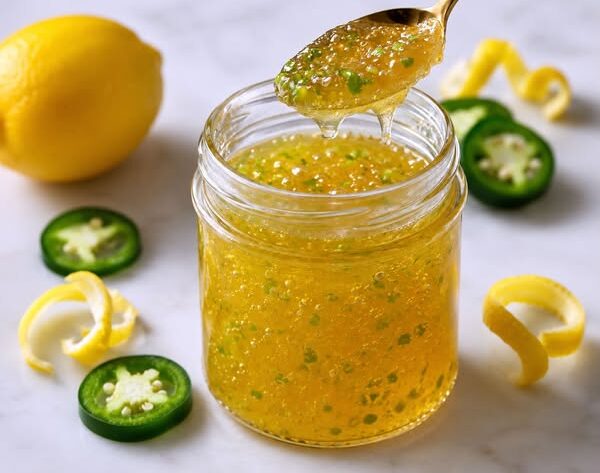
Bright, tangy, slightly spicy, and beautifully glossy, Lemon Zest Jalapeño Shine Jelly is a fun homemade preserve that combines fresh lemon zest with the gentle heat of jalapeños. The result is a vibrant sweet-and-spicy jelly that works wonderfully as a spread, appetizer topping, glaze, or accompaniment to cheese and crackers.
Its beautiful golden color, flecks of green jalapeño, and fresh citrus aroma make it especially attractive when served at gatherings. The sweetness balances the jalapeño heat, while lemon zest adds a fragrant citrus note without overwhelming the pepper flavor.
Recipe at a Glance
Prep Time: 15 minutes
Cooking Time: 15–20 minutes
Processing Time: 10 minutes
Total Time: About 45 minutes
Yield: Approximately 4–5 half-pint jars
Cuisine: American-inspired
Course: Condiment / Preserve
Heat Level: Mild to medium
Ingredients
- 2–3 fresh jalapeños, finely chopped
- 1 tablespoon finely grated lemon zest
- ½ cup freshly squeezed lemon juice
- 1 cup apple cider vinegar
- 5 cups granulated sugar
- 1 pouch liquid fruit pectin, approximately 85 ml
- ¼ teaspoon salt
- ½ cup finely chopped yellow or green bell pepper, optional
- 1–2 drops yellow food coloring, optional
Important: For shelf-stable canning, use a tested jelly/canning recipe and follow current food-safety guidance. Do not assume that changing the quantities of acidic ingredients, peppers, sugar, or pectin preserves the same safety or gel characteristics.
Why You’ll Love This Jelly
There is something special about the contrast between citrus and chili. Lemon brings brightness and acidity, while jalapeño contributes fresh pepper flavor and warmth.
This jelly isn’t simply hot. The sugar gives it a pleasant sweetness, the vinegar adds tang, and the lemon zest provides a fragrant finish.
It is also incredibly versatile.
Try it with cream cheese and crackers for an easy appetizer, brush it over grilled chicken, spoon it over baked brie, or use a small amount as a glaze for roasted vegetables.
Preparing the Jalapeños
Wash the jalapeños thoroughly and dry them.
Remove the stems. For a milder jelly, remove the seeds and white membranes before chopping. If you prefer more heat, leave some of the membranes intact.
Finely chop the peppers. Small pieces distribute more evenly throughout the jelly and give the finished preserve an attractive appearance.
When handling fresh jalapeños, avoid touching your eyes or face. Wearing food-safe gloves can be helpful, particularly if you’re sensitive to chili peppers.
Preparing the Lemon
Wash and dry the lemon before zesting.
Use a fine grater or microplane to remove only the bright yellow outer layer. Avoid grating deeply into the white pith because it can contribute bitterness.
Freshly squeezed lemon juice gives the jelly a cleaner flavor than bottled juice.
How to Make Lemon Zest Jalapeño Jelly
1. Combine the Ingredients
Place the chopped jalapeños, lemon zest, lemon juice, apple cider vinegar, salt, and optional bell pepper into a large stainless-steel saucepan.
Use a pan considerably larger than the amount of liquid because jelly mixtures can foam vigorously as they boil.
Bring the mixture to a gentle boil over medium-high heat.
2. Add the Sugar
Gradually add the granulated sugar while stirring constantly.
Continue stirring until the sugar has completely dissolved.
Once dissolved, increase the heat and bring the mixture to a full rolling boil—one that continues bubbling even while you stir.
3. Add the Pectin
Add the liquid pectin according to the manufacturer’s instructions.
Return the mixture to a vigorous boil while stirring.
Boil for the specified time on the pectin package. Liquid and powdered pectins can require different procedures, so follow the instructions for the specific product you’re using.
Avoid unnecessarily extending the cooking time, as excessive boiling can affect the final texture and flavor.
4. Check the Jelly
The jelly should look glossy and slightly thickened.
Remember that jelly usually becomes considerably firmer as it cools, so it may appear more fluid while hot than it will in the jar.
If desired, skim foam from the surface with a clean spoon.
Add a tiny amount of yellow food coloring only if you want a brighter golden appearance. The jelly is perfectly delicious without it.
Safe Jar Preparation
Use clean jars specifically intended for food preservation.
For shelf-stable storage, follow a tested water-bath canning process appropriate for the exact recipe and jar size rather than improvising processing times.
Fill hot jars according to the tested recipe’s headspace requirements. Wipe the rims clean, apply the lids and rings as directed, and process according to the validated instructions.
Allow processed jars to cool undisturbed.
Check the seals before storing.
If you are not using a tested canning method, treat the jelly as a refrigerated preserve rather than storing it at room temperature.
How to Serve It
The possibilities are almost endless.
With Cream Cheese
Spread softened cream cheese onto crackers and spoon a little jalapeño jelly over the top. The creamy cheese provides a wonderful contrast to the sweet, spicy jelly.
With Baked Brie
Place the jelly over warm baked Brie and serve with gluten-free crackers or toasted bread.
As a Chicken Glaze
Brush a thin layer over cooked chicken during the final few minutes of cooking. The sugars will caramelize beautifully.
With Grilled Meat
A small spoonful alongside grilled pork, chicken, or steak adds sweetness and acidity that can brighten a rich meal.
On a Sandwich
Use a thin layer in a turkey, ham, or grilled cheese sandwich for a sweet-and-spicy upgrade.
How Spicy Is It?
The heat level depends largely on the jalapeños.
Some jalapeños are surprisingly mild, while others can be quite fiery. Removing the seeds and membranes generally produces a gentler result, although most of the capsaicin responsible for heat is concentrated in the internal membranes rather than the seeds themselves.
For a mild version, use fewer jalapeños and remove the membranes.
For more heat, use additional jalapeños or retain some of the membranes—but make sure any recipe intended for canning has been properly tested for the changed ingredient quantities.
Tips for the Best Jelly
Use fresh lemons. Fresh zest and juice provide the brightest citrus flavor.
Chop peppers finely. Larger pieces can make the jelly difficult to spread.
Don’t use a small saucepan. Jelly can foam and rise quickly.
Stir until sugar dissolves. Undissolved sugar can affect the texture.
Use the correct pectin. Liquid and powdered pectin are not always interchangeable.
Let it cool completely. The jelly continues to set as it cools.
Label your jars. Include the name and date so you can easily track storage.
Storage
If properly processed using a validated canning recipe and procedure, unopened jars can be stored according to standard home-canning recommendations.
For a jelly that has not been processed using a tested shelf-stable method, refrigerate it promptly and use it as a refrigerated preserve.
Once opened, keep the jar refrigerated and always use a clean utensil when serving.
Discard the jelly if you notice mold, fermentation, an unusual odor, bubbling that wasn’t present originally, or any other sign of spoilage.
Can You Freeze It?
Yes, if you’re making a refrigerator-style jelly rather than relying on shelf-stable canning.
Leave appropriate space for expansion in freezer-safe containers and freeze until solid. Thaw in the refrigerator.
The texture may be somewhat softer after freezing and thawing, but it can still work beautifully as a sauce or glaze.
Nutrition Information
Approximate nutrition per 1 tablespoon serving:
- Calories: 45 kcal
- Carbohydrates: 12 g
- Sugar: 11 g
- Protein: 0 g
- Fat: 0 g
- Fiber: 0 g
- Sodium: 15–25 mg
Nutrition is an estimate and will vary depending on the ingredients, serving size, and amount of jelly consumed.
Frequently Asked Questions
Can I make this jelly less sweet?
Sugar isn’t only responsible for sweetness in jelly—it also contributes to the preservation process and helps pectin gel. Don’t substantially reduce the sugar in a canning recipe unless you’re using a pectin specifically designed for reduced-sugar recipes and following its tested instructions.
Can I use lime instead of lemon?
Absolutely for a refrigerator version. Lime gives the jelly a slightly sharper, more tropical flavor. For shelf-stable canning, use a tested recipe rather than substituting acidic ingredients on your own.
Can I make it without food coloring?
Yes. Food coloring is completely optional. Lemon zest and peppers naturally give the jelly plenty of visual interest.
Why didn’t my jelly set?
Possible causes include incorrect pectin quantities, inaccurate ingredient ratios, insufficient boiling, or using pectin incorrectly. Follow the directions supplied with your particular pectin.
What cheese goes best with jalapeño jelly?
Cream cheese, goat cheese, Brie, sharp cheddar, and soft cheeses all pair beautifully with this sweet-and-spicy preserve.