 admin1
Guava leaves have been used in traditional herbal medicine for generations. Rich in plant compounds such as flavonoids, polyphenols, and antioxidants, these humble leaves have attracted scientific interest for their potential biological properties.
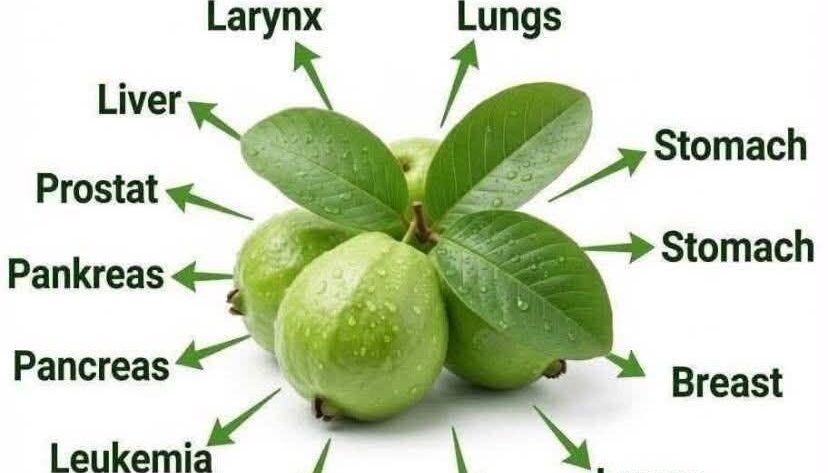
Some online wellness articles claim that guava leaves can naturally fight against 12 types of cancer. While laboratory research has explored the effects of guava leaf extracts on certain cancer cells, there is currently no reliable clinical evidence that guava leaves prevent, treat, or cure 12 types of cancer in humans.
Understanding the difference between promising laboratory research and proven cancer treatment is essential.
This article explores the traditional uses of guava leaves, their potentially beneficial plant compounds, what research actually shows, and how to approach herbal remedies safely.
1. What Makes Guava Leaves Interesting to Researchers?
Guava (Psidium guajava) is a tropical fruit-bearing tree widely grown in Pakistan, India, Southeast Asia, and other warm regions.
While its fruit is enjoyed for its flavor and nutritional value, its leaves have also been studied for their chemical composition and traditional medicinal uses.
Guava leaves contain several bioactive compounds that researchers are investigating for their potential effects on human health.
| Compound | Potential biological activity |
|---|---|
| Quercetin | Antioxidant and anti-inflammatory activity |
| Guajaverin | Flavonoid studied for biological activity |
| Gallic acid | Antioxidant activity |
| Catechin | Antioxidant and cellular effects |
| Tannins | Astringent properties |
| Terpenoids | Investigated for various biological effects |
These compounds have shown interesting activity in laboratory experiments, including studies involving cancer cells. However, the effects depend on the particular extract, concentration, and experimental conditions. PMC+1
2. Can Guava Leaves Fight 12 Types of Cancer?
This claim requires careful examination.
Scientists have studied guava leaf extracts against several cancer cell lines in laboratory settings. Some experiments have reported reduced cancer-cell growth, changes in cellular signaling, and increased programmed cell death, known as apoptosis.
However, killing cancer cells in a laboratory dish is not the same as treating cancer in a human body.
Researchers must establish whether an extract can reach the relevant tissue, whether it is safe for normal cells, what dose is effective, and whether it improves outcomes in patients.
What laboratory research has explored
| Cancer research area | What has been investigated |
|---|---|
| Breast cancer | Effects on cancer-cell growth and survival |
| Prostate cancer | Apoptosis and cellular signaling |
| Colorectal cancer | Cell proliferation and angiogenesis |
| Lung cancer | Antiproliferative effects of selected extracts |
| Leukemia | Effects on cancer-cell viability |
| Cervical cancer | Experimental activity of certain extracts |
| Oral cancer | Effects on selected carcinoma cell lines |
| Liver cancer | Activity of isolated plant compounds |
| Ovarian cancer | Effects of selected guava-derived compounds |
| Kidney cancer | Experimental effects of isolated compounds |
| Melanoma | Activity of certain guava-derived compounds |
| Multiple myeloma | Laboratory studies of cancer-cell viability |
These are examples of cancer research involving guava leaves or compounds derived from guava. They do not demonstrate that drinking guava leaf tea fights all these cancers in people.
The published research includes laboratory cell studies, some animal experiments, and reviews of potential anticancer mechanisms. It does not establish guava leaves as a proven cancer treatment. PMC+2
3. How Might Guava Leaf Compounds Affect Cancer Cells?
Researchers have explored several possible mechanisms.
Antioxidant activity
Guava leaves contain polyphenols and flavonoids that demonstrate antioxidant activity in laboratory tests.
Oxidative stress is involved in many biological processes, including cellular damage. However, the relationship between antioxidants and cancer is complex, and antioxidant activity alone does not prove cancer prevention or treatment.
Apoptosis: Programmed Cell Death
Some laboratory studies have reported that particular guava leaf extracts can activate apoptosis in selected cancer cell lines.
Apoptosis is a normal biological process through which damaged or unwanted cells are removed.
Researchers are interested in whether compounds that influence this process might eventually contribute to cancer drug development. PubMed+1
Effects on Cellular Signaling
Cancer cells may use certain signaling pathways to support their growth and survival.
Experimental research has found that some guava leaf extracts can influence pathways such as AKT/mTOR and MAPK in prostate cancer cells.
These findings are scientifically interesting, but they do not show that consuming guava leaves produces the same effects inside a person. PubMed+1
Potential Effects on Angiogenesis
Angiogenesis is the formation of new blood vessels.
Tumors can use this process to develop a blood supply that supports their growth. Some laboratory studies have investigated whether guava leaf extracts influence angiogenesis in cancer models.
This remains an experimental area of research rather than a proven treatment strategy using guava tea. PMC+1
4. Traditional Health Benefits of Guava Leaves
Beyond cancer-related research, guava leaves have a long history of traditional use for several everyday health concerns.
Digestive Health
Guava leaf preparations have traditionally been used for digestive complaints, including diarrhea and stomach discomfort.
Some research has explored the antimicrobial and other biological properties of guava leaf extracts. However, herbal preparations should not replace medical treatment for persistent diarrhea, dehydration, or serious gastrointestinal symptoms.
Blood Sugar Management
Researchers have investigated guava leaf extracts for their potential effects on carbohydrate digestion and blood glucose.
Some preliminary studies suggest possible effects on post-meal blood sugar, but results from specific preparations cannot automatically be applied to homemade tea.
People taking diabetes medication should consult their healthcare professional before using guava leaf products regularly.
Oral Health
Guava leaves have also been studied for potential antimicrobial properties and traditional oral-care applications.
However, guava leaf preparations should not replace brushing, flossing, dental checkups, or treatment for gum disease.
These traditional uses and preliminary research findings are summarized in scientific reviews of guava leaves. PMC+1
5. How to Prepare Traditional Guava Leaf Tea
Guava leaf tea is a traditional herbal preparation in several cultures.
The following is a general preparation for a mild herbal infusion. It is not a cancer treatment, and no clinically established cancer-related dosage exists.
Ingredients
- 2–3 clean, fresh guava leaves from an appropriately identified plant
- 1 cup (250 ml) water
Instructions
- Wash the leaves thoroughly under clean running water.
- Bring the water to a boil in a clean saucepan.
- Add the leaves and reduce the heat.
- Simmer gently for approximately 5 minutes.
- Remove from the heat and allow the infusion to cool.
- Strain before serving.
Important: Do not use this preparation to treat cancer or replace prescribed medication. People with medical conditions or those taking prescription medicines should consult a healthcare professional before using guava leaves medicinally.
6. Safety Precautions and Possible Side Effects
Guava leaves are natural plant material, but concentrated extracts and medicinal preparations may have different effects from eating guava fruit.
Potential concerns include:
- Digestive discomfort or nausea
- Allergic reactions in susceptible individuals
- Possible effects on blood glucose
- Uncertain interactions with prescription medicines
- Unknown safety of concentrated extracts during pregnancy or breastfeeding
Cancer patients should be particularly cautious because herbal products may interact with chemotherapy, radiation therapy, immunotherapy, or other prescribed treatments.
Before using guava leaf supplements or concentrated extracts, discuss them with an oncologist or qualified pharmacist.
The safety and effectiveness of guava leaf products in cancer patients have not been adequately established. Medical Dialogues+2
7. What Cancer Patients Should Know
If you or someone you love has been diagnosed with cancer, it is understandable to look for natural ways to support health.
However, there is an important distinction between supporting general wellness and treating cancer.
| General wellness | Cancer treatment |
|---|---|
| Balanced nutrition | Evidence-based medical treatment |
| Appropriate physical activity | Surgery when indicated |
| Adequate sleep | Chemotherapy when indicated |
| Emotional support | Radiation therapy when indicated |
| Discussing supplements with a doctor | Prescribed targeted or immune therapies when appropriate |
Guava leaves may be an interesting subject for scientific research, but they should not be used as a substitute for established cancer care.
Delaying or stopping effective treatment in favor of an unproven herbal remedy can allow cancer to progress and reduce treatment opportunities.
Frequently Asked Questions
Can guava leaves cure cancer naturally?
No. There is currently no reliable clinical evidence that guava leaves cure cancer. Laboratory studies have investigated possible anticancer activity, but human clinical trials are needed to establish safety and effectiveness.
Which cancers have been studied using guava leaves?
Laboratory research has explored guava-derived extracts or compounds in models involving breast, prostate, colorectal, lung, leukemia, cervical, ovarian, and other cancers.
These studies do not establish that guava leaves treat these cancers in humans.
Is guava leaf tea safe for cancer patients?
Its safety during cancer treatment has not been adequately established. Patients should consult their oncologist before using guava leaf tea, supplements, or concentrated extracts.
Can guava leaves prevent cancer?
There is insufficient clinical evidence to establish that guava leaves prevent cancer in humans. A healthy lifestyle and appropriate screening remain important evidence-based approaches to cancer risk reduction.
Final Thoughts: The Science Behind Guava Leaves
Guava leaves are a fascinating part of traditional herbal medicine and a promising subject for certain areas of laboratory research.
Their natural compounds have demonstrated antioxidant activity and have shown interesting effects in selected cancer-cell experiments.
However, the claim that guava leaves naturally fight 12 types of cancer goes beyond what current human evidence supports.
The most accurate conclusion is that guava leaves contain compounds worth investigating for future cancer research, but they are not a proven cancer prevention or treatment method.
Natural remedies deserve scientific investigation, and people facing cancer deserve treatments supported by reliable evidence.